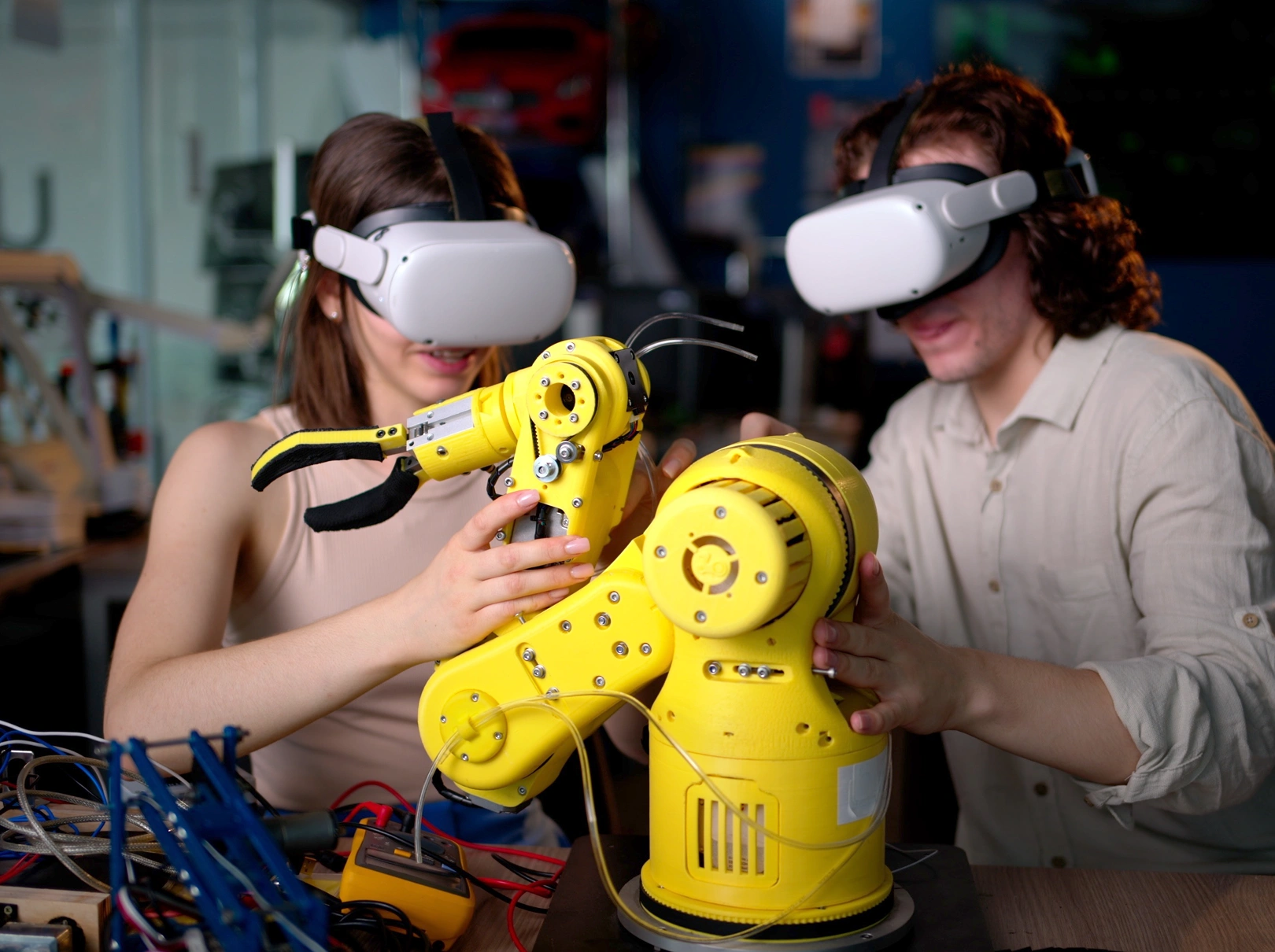
A digital twin is a virtual, data-driven replica of a physical object, machine, or process that updates in real time using sensor data. In manufacturing, digital twins let teams test and optimize operations virtually before making physical changes—reducing downtime, cutting maintenance costs, and shifting decisions from reactive to proactive.
A digital twin is a virtual, data-driven replica of a physical object, system, or process. In manufacturing, it can represent a machine, a production line, a full factory, or a supply chain network.
A digital twin differs from a static simulation in one key way. The digital twin is continuously updated using real-time data from sensors, machines, and enterprise systems. This lets it mirror current conditions and predict future outcomes.
Definition – Digital twin: A continuously updated virtual model of a physical asset that uses live operational data to reflect real-world conditions and forecast performance.
According to IBM, digital twins help organizations improve decision-making, reduce downtime, and optimize performance using real-time operational data.
The digital twin process follows a closed loop. Data flows from the physical asset to the model, through analytics, and back into real-world decisions.
The flow works in six stages:
This closed loop lets manufacturers test scenarios virtually before making any physical changes. That reduces both risk and cost.
Digital twins move from theory to value in three common manufacturing use cases. Each one solves a specific operational problem.
Example 1: Predictive maintenance. A manufacturer builds a digital twin of a CNC machine. The twin analyzes vibration, temperature, and load data to predict failure before it happens. This cuts unplanned downtime and maintenance costs.
Example 2: Production line optimization. A digital twin of an assembly line simulates changes in layout or speed. Managers test configurations virtually to find bottlenecks. This improves throughput without disrupting live operations.
Example 3: Energy efficiency monitoring. Factories use digital twins to track energy use across machines and shifts. This helps reduce waste and lower operating costs.
According to McKinsey, digital twins can reduce maintenance costs by up to 40% and improve equipment uptime by 10-20% in industrial settings.
Digital twins shift manufacturing from hindsight to foresight. The table below contrasts the two approaches across five dimensions.
| Aspect | Traditional Systems | Digital Twin Technology |
| Data usage | Historical | Real-time and predictive |
| Decision making | Reactive | Proactive |
| Simulation | Limited | Continuous |
| Risk testing | Physical trials | Virtual scenarios |
| Cost optimization | Manual | AI-driven |
This shift from reactive to proactive decision-making is what makes digital twins strategically valuable.
On their own, digital twins mirror reality. Combined with AI, digital twins begin to reason, predict, and recommend actions.
AI models analyze patterns in operational data. The digital twin provides the context and structure that those models need. Together, they enable four capabilities:
According to Accenture, organizations using AI-powered digital twins can achieve up to 20% improvement in operational efficiency.
Digital twin machine learning extends the concept further. Machine learning models learn continuously from incoming data and improve their predictions over time.
For manufacturers, this delivers three benefits:
The digital twin evolves alongside the physical system. Instead of relying on fixed rules, it becomes smarter with every data cycle.
The best digital twin software depends on your business goals, scale, and system complexity. Evaluate platforms against five core capabilities.
| Capability | Why It Matters |
| Real-time data ingestion | Accurate system mirroring |
| IoT integration | Sensor-level visibility |
| AI and analytics support | Predictive insights |
| Cloud scalability | Performance and flexibility |
| Integration readiness | ERP, MES, and PLM connectivity |
Most platforms integrate with cloud providers and industrial IoT ecosystems. This lets digital twins scale across multiple facilities.
Digital twin consulting helps organizations turn strategy into working systems. Implementation is rarely plug-and-play, so expert guidance reduces failed deployments.
Consulting teams help organizations with four tasks:
Digital twin integrators connect the twin to the systems it depends on. Digital twins do not operate in isolation—they pull data from ERP systems, MES platforms, IoT devices, and analytics tools.
Integrators ensure four outcomes:
Without proper integration, even an advanced digital twin risks becoming another disconnected system.
Digital twins in healthcare are gaining traction beyond manufacturing. Hospitals use them to model patient flow, optimize resource use, and predict equipment failures.
This cross-industry adoption reinforces the long-term relevance of digital twin technology. The same principles that improve a factory line also improve hospital operations.
A digital twin is a live virtual copy of a physical thing, like a machine or factory. It uses real-time sensor data to mirror the real object and predict how it will behave.
A simulation models a scenario once with fixed inputs. A digital twin updates continuously with live data, so it reflects current conditions and improves its predictions over time.
Manufacturing leads adoption, using digital twins for maintenance and production planning. Healthcare, energy, automotive, and aerospace also use them to model complex systems.
According to McKinsey, digital twins can reduce maintenance costs by up to 40% in industrial settings. They can also improve equipment uptime by 10–20%.
Digital twin software needs real-time data ingestion, IoT integration, AI analytics, and cloud scalability. It must also connect to ERP, MES, and PLM systems.
Many do, because implementation involves data architecture and system integration. Consulting helps identify which processes to twin and aligns the project with business goals.
No. IoT refers to the connected sensors that collect data. A digital twin is the virtual model that uses IoT data to mirror and predict asset behavior.
Digital twins are practical, scalable tools, not experiments reserved for large enterprises. They help manufacturers reduce risk, improve efficiency, and make better decisions in complex environments.
By combining real-time data, AI, and machine learning, digital twins shift operations from reactive problem-solving to proactive optimization. For manufacturers facing growing complexity, they offer something rare: clarity before action.
Organizations that invest early in a digital twin strategy, supported by the right software, consulting, and integration expertise, position themselves to compete more intelligently in a data-driven future.
Written by


Synkrone8 is a group of manufacturing IT specialists, ERP consultants, and smart-factory engineers who turn shop-floor challenges into connected, data-driven operations. They write about Industry 4.0, ERP, IIoT, and digital transformation drawn from real implementation experience.
Share with your community

Discover more insights, trends, and stories from our experts.
ERP
Industrial
ERP for production planning is the practice of using enterprise resource planning software to schedule...
8 Min Read
21, Jul 2026

Zoho
Zoho CRM is a cloud-based customer relationship management system that centralizes sales pipelines, customer contacts,...
12 Min Read
13, Jul 2026
Zoho
Yes, you can scale Zoho CRM from a 5-person startup to a 5,000-seat enterprise without...
9 Min Read
30, Jun 2026
Book a free 30-minute discovery call with one of our manufacturing consultants. No pitch. No pressure. Just an honest conversation about what's possible for your operation.